Reserve a table
Main Dining
ReservationAshitaba
Reservation
Reservation

of Casa CABaN HAYAMA
Story vol.11
6, July 2026
With a coast that transforms with each season, Hayama sees its summer truly arrive as Umi no Ie (beach houses) appear on its sandy shores. From those that retain a nostalgic Showa-era (1926-1989) charm to spaces exuding resort-like comfort, the sight of these diverse beach houses lining the water’s edge is a hallmark of summer in Hayama. The four beaches of Chojagasaki, Ohama, Isshiki, and Morito each boast distinct topography and natural surroundings, giving them their own characteristic atmospheres.
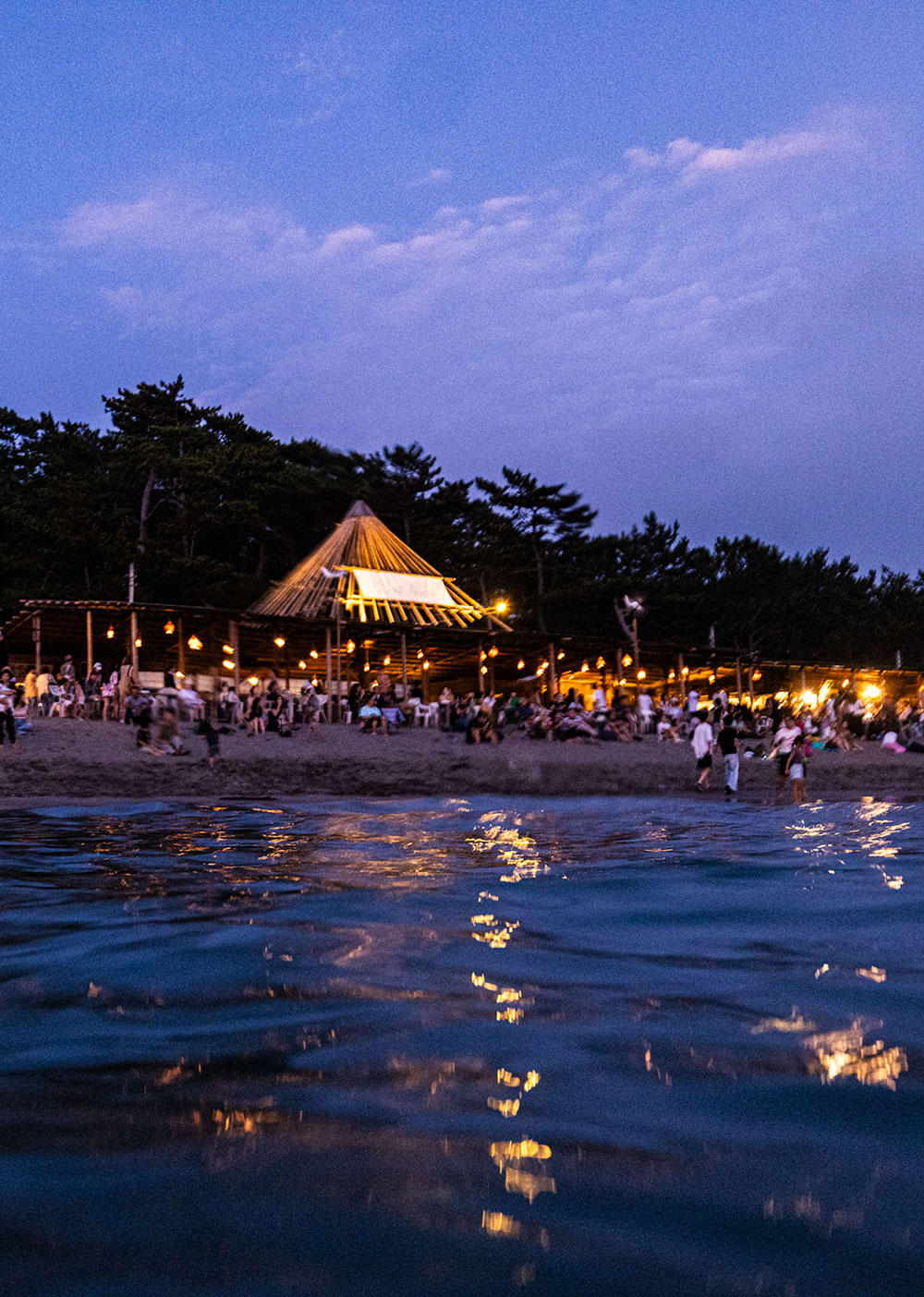
At Morito Beach, home to Casa CABaN HAYAMA, one beach house that particularly catches the eye is OASIS, a beautiful bamboo structure that radiates an organic warmth. Established in 1981 by a group of artistically minded friends living in Hayama, this place continues to uphold the same spirit as it did back then. “We change the design every year and personally build it in the month leading up to the opening,” explains Masaaki Tsuchikawa, one of the owners and the representative director of the Morito Beach Cooperative Association. The sturdy bamboo stalks used to construct OASIS are collected by the staff themselves from the mountains surrounding Hayama, which require regular maintenance. This unwavering dedication to local, natural materials and a hands-on approach of physically weaving a space together has profoundly influenced beach culture across Japan.
At OASIS and other unique beach houses along the shore, events are held regularly. Part of the allure is discovering the thoughtfully curated food and drinks, with each establishment offering its own unique flair. In summer, the Hayama seaside is not only a place to enjoy marine activities but also a hub where new cultures are born and intertwined. Spending a summer evening in one of those remarkable beach houses, while enveloped in the sea breeze, is sure to weave vivid memories into your tranquil stay at the hotel.
Since around 1887, when international residents first established their homes here, and followed later with the construction of the Imperial Villa, Hayama has cultivated a refined resort culture, attracting prominent figures from various fields. The relationship between people and the sea in this area began with shio-toji (seawater therapy), a form of medical recuperation.
Just as toji (hot spring therapy) restores the mind and body, seawater therapy involves immersing oneself in the ocean to harness nature’s healing power. Tracing its history, it is said that this practice was already being carried out during the Heian period (794-1185) under the name ami (bathing). In fact, the use of the character for “bath” (浴) in the Japanese term for “seawater bathing” (海水浴) also hints at its roots. The reason Dr. Erwin von Bälz, a German physician who served as a personal physician to Emperor Meiji, identified Hayama as an ideal wellness resort likely stemmed from its environment—surrounded by gentle waves and lush mountains—as well as his firm belief in the preventive benefits of seawater bathing.
The origins of the Umi no Ie (beach houses) can also be found in the simple huts where visitors coming for seawater therapy would change and rest. While their appearance has evolved with the passage of time, the historical essence of this resort destination has been seamlessly preserved across generations. With no windows or walls, the beach houses of today allow the gentle sea breeze to blow right through. Listening to the sound of the waves, one can simply surrender to the flow of time drifting along the shore. The indescribable sense of comfort felt on the shores of Hayama may stem from this ancient “memory of healing” still quietly breathing within the landscape today.

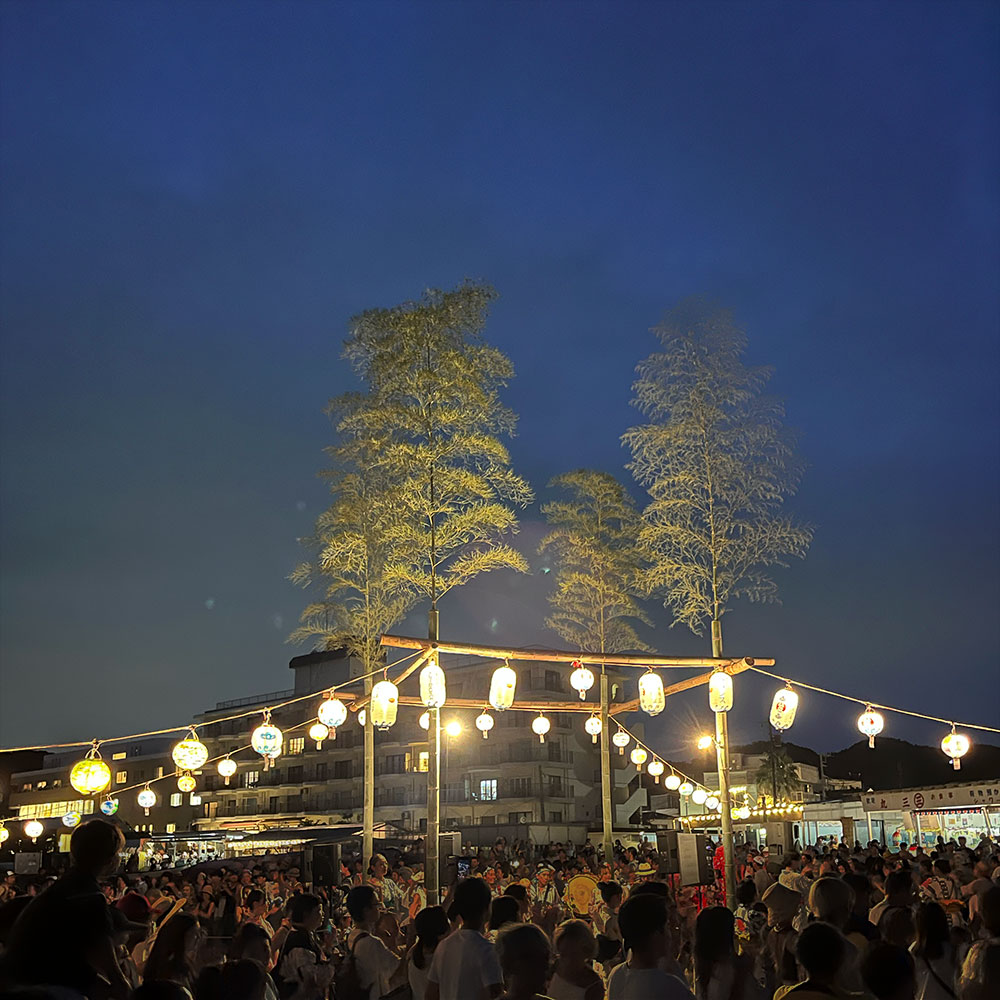
As dusk falls on August 13, the first day of the Obon period (Iribon) honoring ancestral spirits, the resonant beats of taiko drums and melodic festival songs will drift through your window, carried gently by the coastal breeze. Danced through generations to welcome and comfort the spirits of ancestors returning during the Obon season, the Bon Odori is a beautiful seasonal tradition that defines the Japanese summer.
On the night of the Morito Beach Bon Odori Festival, the coast overflows with an extraordinary energy—and at the heart of this bustling scene is the power of music to unite the crowd. Performing live Bon Odori music beneath the yagura (raised festival stage) erected on the sandy beach is the Hayama Bon Gakudan, a band of musicians living in Hayama. The groove they create envelops the nighttime seaside in a warm sense of togetherness. “Hayama, Hayama, let’s form a circle and dance to the Hayama Ondo.” Just as the lyrics of the Hayama Ondo suggest, the circle of dancers surrounding the yagura undulates like gentle ocean waves, expanding beautifully as the hours unfold. Though the Bon Odori at Morito Beach began in the 1950s, it was once discontinued around the transition to the Heisei era (1989). Fortunately, the staff of the beach house OASIS led the efforts in reviving it. Since 2016, the festival has featured its current live performance, drawing even larger crowds to the shoreline.
Then comes the night of August 16, which marks Okuribon, the sending off of the spirits. In the enveloping darkness of the sea, the soft, faint glow of Toro Nagashi (floating lanterns) appears, drifting along the water to mourn the souls of the departed. The lanterns swaying gently on the waves and the warm glow spilling from the beach houses— the scene they weave together with the night sea is easily one of the most beautiful moments Hayama summer has to offer. These beach houses appear only for the fleeting summer months disappear from the shore as the season ends. When the coast returns to its timeless tranquility, you are struck by a quiet realization: it is precisely this ephemerality that makes summer in Hayama shine so brilliantly.
References:
Hayama: The Practice of High-Quality Slow-Style Branding (published by Fuyoshobo)
The Japan Society of Leisure and Recreation Studies website