
Reserve a table
Main Dining
ReservationAshitaba
Reservation
Reservation

of Casa CABaN HAYAMA
Story vol.14
13, Oct 2026
Imagine looking out to Morito Beach from the guestrooms at Casa CABaN HAYAMA, with Morito Daimyojin shrine standing at the tip of the cape beyond the beach. The shrine was founded in 1180, toward the end of the Heian period. Legend has it that Minamoto no Yoritomo, who would later establish the Kamakura Shogunate, deeply loved the scenic beauty of Morito Beach and handpicked this place for the shrine.
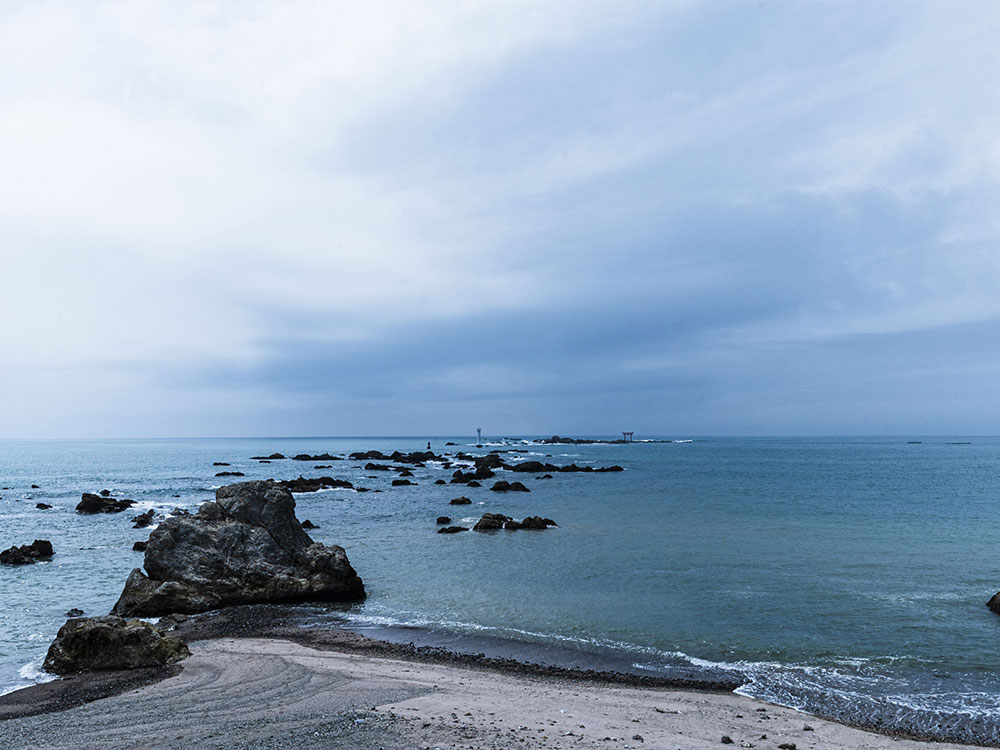
It is believed that the coastline of Hayama extended farther out to sea approximately 850 years ago than it does today. The small island of Najima, where a beautiful vermilion torii gate stands beyond the cape, was once connected to Morito Beach by land. It is also said that Lord Yoritomo’s villa stood there.
On the island where a small shrine known as Ryujin-gu stands today, remnants that evoke the atmosphere of that time still remain. These include Yoritomo no Sensui (Yoritomo’s Spring), a well said to have been dug at his request, as well as traces of building pillars.
“The sacred tree behind the main hall and the site of the small sanctuary above it are, in fact, the birthplace of Morito Daimyojin,” explains Takahiro Moriya, a senior shrine priest (Negi).
“Even before the shrine was founded, there was a Hiyoshi Shrine here dedicated to Ōyamakui no Kami, the same deity worshipped at Hie Shrine in Akasaka. It was precisely because this is such a magnificent scenic spot that Lord Yoritomo entreated a branch spirit of the deity from Mishima Taisha, whom he deeply revered, and enshrined it here. This marked the beginning of Morito Daimyojin.”
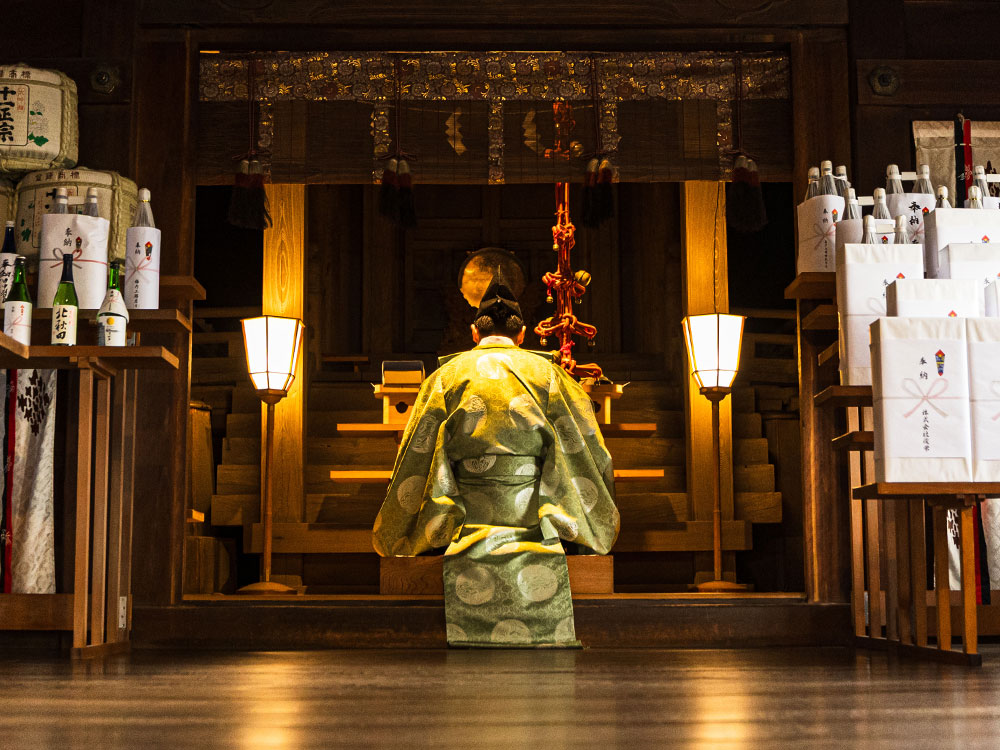
Prayers for the peace and well-being of the land are offered here every day.
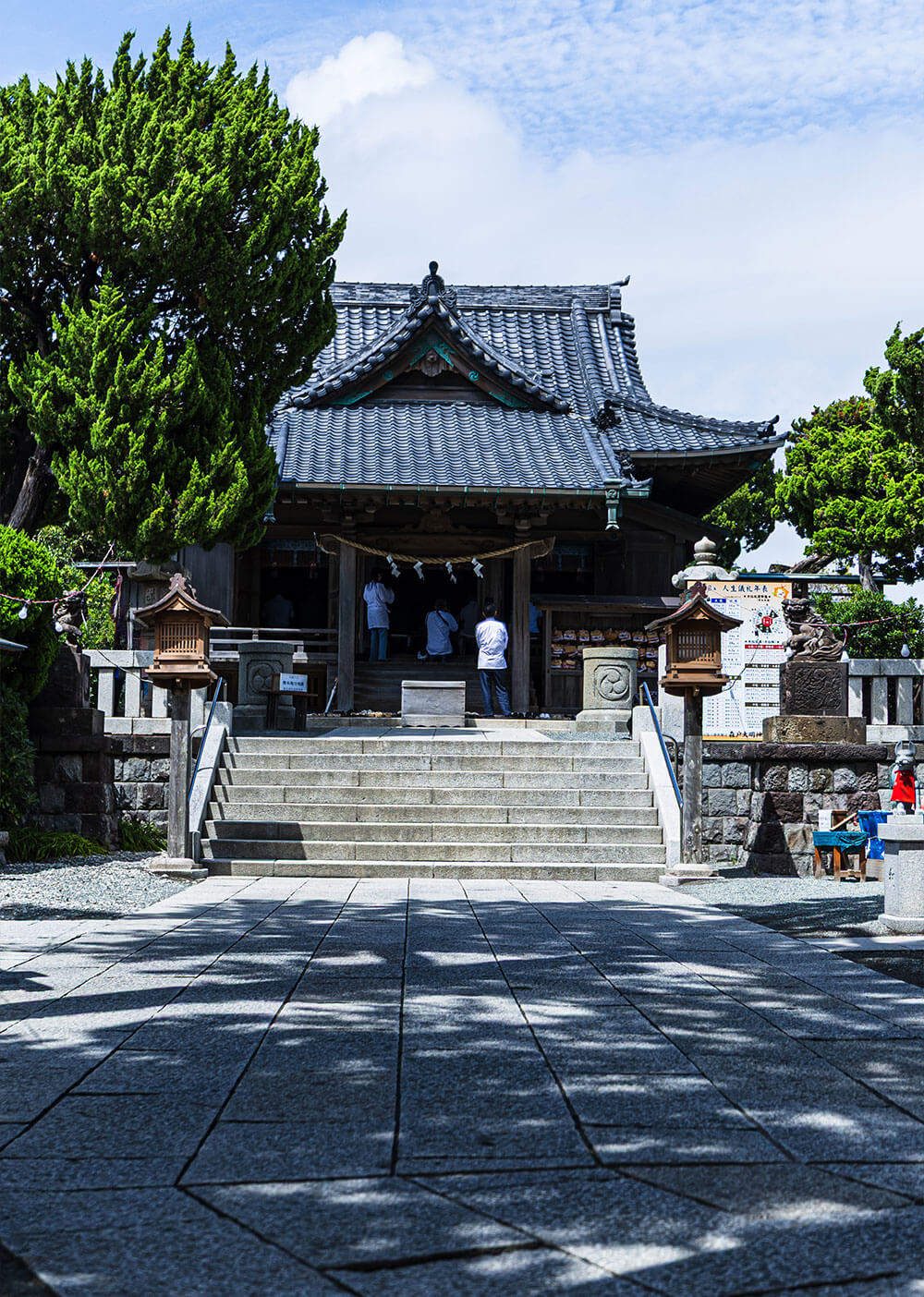
Morito Daimyojin Shrine boasts a rich history and distinguished heritage. As you pass through the torii gate and step onto the precincts of the shrine grounds, the main hall stands at the end of a beautifully swept approach, surrounded by lush greenery set against the backdrop of the sea.
“We perform a prayer ritual called the Nikkusai every single morning without fail,” shares Priest Moriya. “People often think of a shrine simply as a place to say prayers or receive amulets, but the foundation of our duty lies in offering daily meals to the deity, praying for the peace of the community, and safeguarding this sacred place where the divine spirit resides. Through daily cleaning, we keep the area around the deity pure and maintain an environment free from disturbances. We also offer continuous prayer for the protection of all visitors. This is the true essence of a shrine.”
Just as Priest Moriya mentioned, prayers for the peace and well-being of Hayama are quietly offered here every day. In this cleanly swept space, anyone can feel the dignified atmosphere for themselves.
The official name of Morito Daimyojin Shrine is Hayama-gō Sōchinju Morito Daimyojin, with Hayama-gō Sōchinju meaning “the grand guardian deity of the Hayama region.” It has continuously watched over the entire land of Hayama, serving as a spiritual anchor for both local residents and visitors alike.
The day we visited to take photographs was the day of the annual festival, Reitaisai. For the approximately 80,000 shrines across Japan, this annual festival is considered the most important event of the year. At Morito Daimyojin, this annual event is also held to commemorate its founding on September 8, 1180, in a way this is the “deity’s birthday.” Gagaku, the elegant ceremonial court music played on instruments like the hōshō and hichiriki, filled the shrine grounds. An envoy from the Association of Shinto Shrines was welcomed, and a solemn ritual followed in the presence of the parishioners' representatives and many attendees.
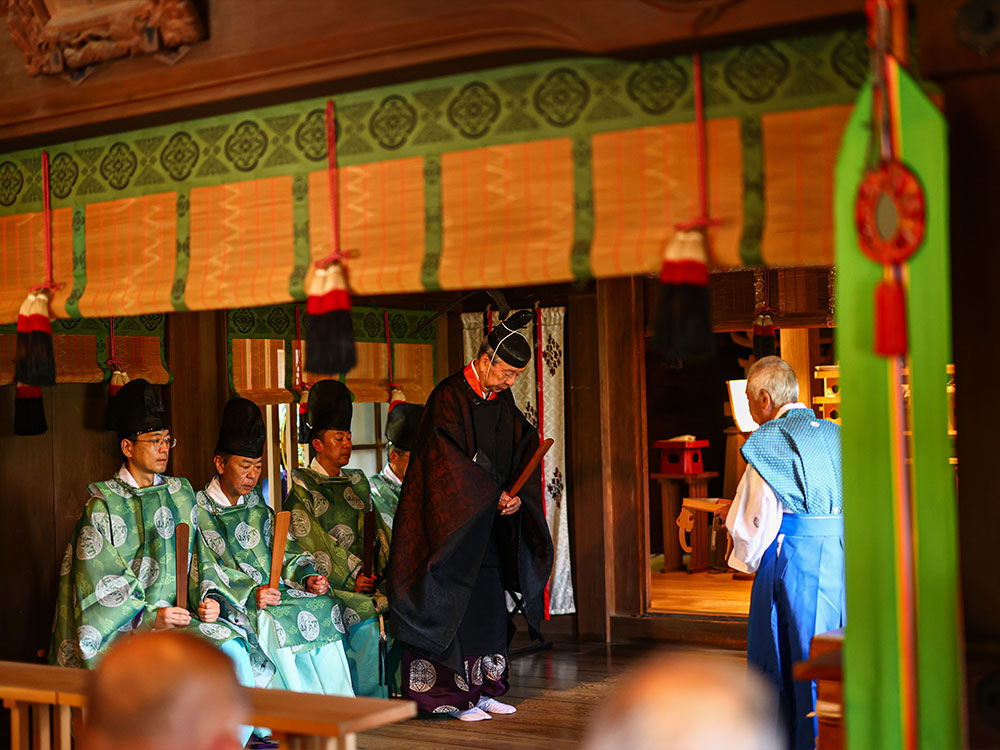
A scene from the annual festival held in 2026.
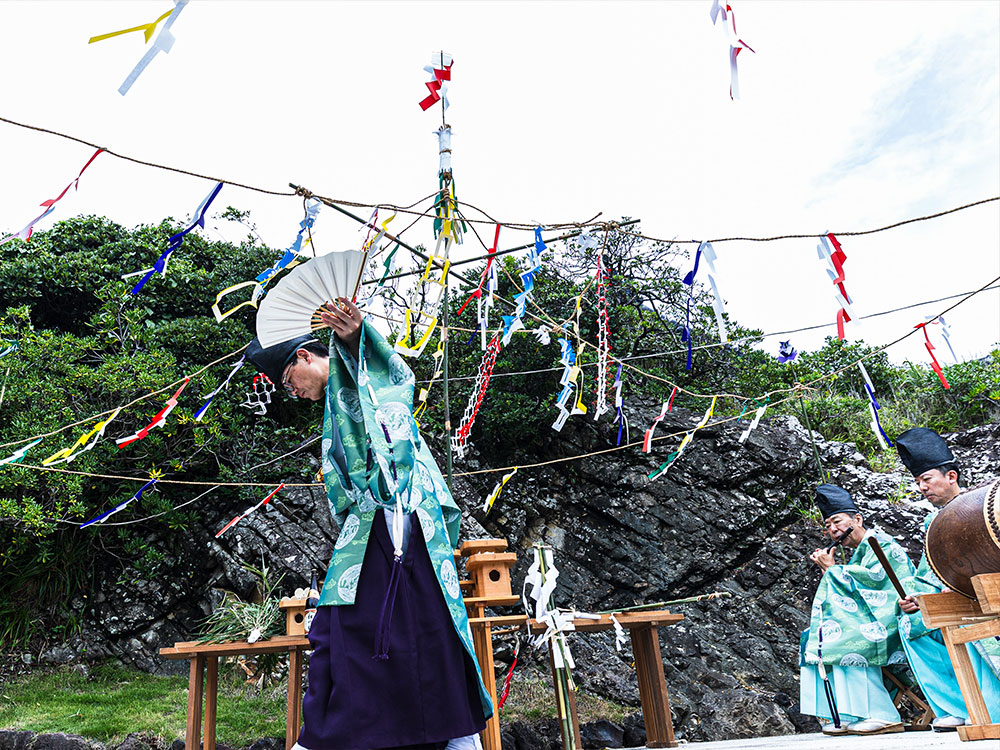
Yudate Kagura (Kamakura Kagura) performed on the day of the annual festival.
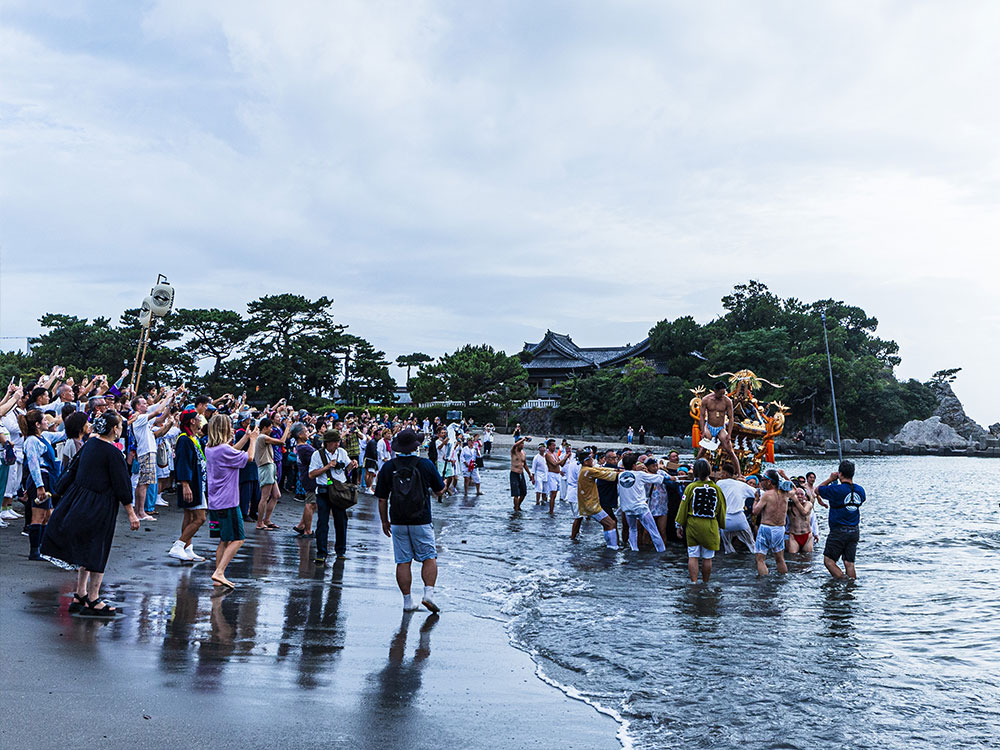
The Hamaori ceremony, where mikoshi portable shrines from each neighborhood association are carried into the sea.
In addition to the annual festival in September, Morito Daimyojin Shrine holds festivals throughout the four seasons, such as the Niiname-sai on November 23 to give thanks for an abundant harvest, and the Kinen-sai in March to pray for a bountiful yield in the coming spring. Known collectively as the Three Great Festivals, these events are the shrine's most important rites, and just as much, they are moments of joy for the community and milestones that mark the rhythm of daily life. Through them, you can feel the deep bond between the local community and the shrine.
"In the past, geology hadn't advanced to the level it has today. Even so, the sites chosen for enshrining the deities were never picked haphazardly," Priest Moriya says. "Since ancient times, shrine locations have been carefully selected paying attention to both topographical safety and reigen, the miraculous power of the deity and Buddhas."
In fact, the current main hall, set deep within the Morito Daimyojin precincts, was built about 400 years ago, yet it is said to have never once suffered damage from a tsunami. "During the Great Kanto Earthquake of 1923," he adds, "a tsunami exceeding 6 meters is said to have reached Hayama. Even then, the main hall reportedly sustained no damage."
Perhaps the land where the deity resides truly harbors a special, unseen power. Morito Daimyojin Shrine stands as if jutting out into the sea. On clear days, you can take in the majestic Mount Fuji beyond the seaside yohaijo, a place for distant worship.
During your stay at Casa CABaN HAYAMA, be sure to visit this seaside shrine. The moment you step inside, you may find yourself breathing a little deeper. Here, surrounded by the sea, greenery and centuries of prayers, a moment of tranquility that will help you find inner peace awaits.
Reference: Morito Daimyojin Shrine website